An affordable bookkeeping service for consultants
Get your bookkeeping done the right way so you can focus on your clients and their needs instead of your admin.
Bookkeeper for consultants and advisory businesses
Do any of these financial scenarios sound familiar as consultant?
- Your invoicing is inconsistent and clients are paying at different times making cash flow hard to predict.
- You are not confident whether you should be charging GST on all of your services or just some of them.
- You engage contractors or subcontractors to deliver work and you are not sure how to classify them correctly for tax and super purposes.
- Your BAS gets done in a rush at the end of the quarter on figures that may or may not be right.
- You have been treating some business expenses as deductions but are not certain the ATO would agree.
- You have no clear picture of your profitability by project, client or service line.
- Your accountant asks for things at tax time that take days to pull together because the records are not current.
- You are spending time on financial admin that should be going into client work, business development and delivering outcomes.

If any of these sound like your consultancy, you are not alone and there is a straightforward fix.
Running a consultancy means carrying two jobs simultaneously, one as the expert your clients pay for, one as the business owner responsible for keeping the practice financially viable.
The work side is what you built the business around. The financial side is what determines whether you get to keep doing it.
Somewhere between finishing a client deliverable and starting the next one, the bookkeeping either gets done properly or it gets done quickly, and for a business where every hour has a billable value, those two things are rarely the same.
Every consultant needs a bookkeeper
A consultancy sells expertise and time. There is no product to purchase, no physical inventory to manage, and in many cases no fixed location or large team. From the outside it can look like a financially simple business. In practice, it is anything but.
Consulting income is typically project-based, retainer-based, or a combination of both. That means revenue is often lumpy, arriving in large amounts when invoices are settled and then tapering off between engagements. Expenses, however, tend to be more consistent: software subscriptions, professional development, subcontractor costs, travel, home office, and professional indemnity insurance among them.
Managing the gap between when income arrives and when obligations fall due requires a current, accurate cash flow picture that most consultants simply do not have because their books are not being maintained with the frequency the business requires.
The billing structure of consulting also creates specific GST and compliance considerations that differ from a product-based business. Whether the service is management consulting, HR advisory, environmental strategy, digital marketing, legal consultation, or agribusiness advisory, the underlying bookkeeping requirements follow a consistent pattern.
Getting them right means the business owner has clean, reliable financial records, a BAS that is lodged on correct figures, and a clear understanding of what the practice is actually generating after all costs.
Why a consulting business needs a bookkeeping service
A consultancy has financial characteristics that are specific to the way the business model works, and managing the books correctly requires understanding those characteristics in detail.
The specific challenges that arise consistently in consulting businesses include:
- Project and retainer income that is difficult to track correctly. A management consultant engaged on a fixed-price strategy project invoices differently from a marketing consultant on a monthly retainer, who invoices differently from an HR consultant billing by the day.
In each case, when income is recognised in the accounting system needs to reflect the actual nature of the engagement. Income invoiced but not yet earned, deposits received before work commences, and retainer fees that cover varying levels of work across different months all require careful treatment to produce a profit and loss statement that accurately reflects the business’s performance rather than just its cash flow timing.
- GST on consulting services and the question of mixed supply. Most consulting services attract GST, but some do not. Legal advice may have specific GST treatment depending on its nature. Export consulting services delivered to overseas clients may be GST-free as an export of services under the zero-rating provisions.
Environmental or agribusiness consultants who deliver services to clients outside Australia need to understand whether those services qualify for zero-rating and how to apply that treatment correctly on each BAS.
Getting this wrong in either direction means either underpaying GST and creating a compliance liability, or overclaiming and paying GST that was not owed.
- Contractor and subcontractor classification. Many consultants engage other consultants, specialists or subcontractors to deliver work. Whether those engagements are structured as genuine contractor relationships or whether the ATO would classify them as employment for super and PAYG withholding purposes is a question with real financial consequences.
A graphic designer, a copywriter or a junior consultant brought in on a project basis under terms that look and feel like employment is not a contractor for super purposes just because their invoice says so.
Misclassification means unpaid super, unremitted PAYG withholding, and potential Fair Work liability going back to the beginning of the arrangement.
- TPAR obligations for certain consulting businesses. Consultancies in IT, management or other relevant service categories that engage contractors may have an obligation to lodge a Taxable Payments Annual Report with the ATO each August, reporting the details of every payment made to contractors during the financial year.
This is an obligation that many consulting business owners are unaware of until the ATO makes contact, and the penalty for non-lodgment can be as high as $1,375 per year.
A bookkeeper managing your accounts tracks TPAR obligations and ensures the lodgment is prepared and submitted on time.
- Expense classification in a service business. A consultant’s legitimate business expenses look different from those of a trade business or a retailer. Home office costs, professional development, conference attendance, business travel, software and technology, professional memberships, and subcontractor costs all need to be correctly classified and documented to support the deductions claimed.
The ATO pays close attention to expense claims in professional services businesses, particularly where home office and travel deductions are involved, and a set of accounts where expenses have been poorly classified or inadequately documented is a material risk at review time.
- Income from multiple clients and projects simultaneously. A consultant who is running three retainer clients, two project engagements and a course or content product at the same time has multiple income streams arriving through multiple channels on different schedules.
Without a bookkeeper maintaining clear records of which income relates to which client and which service line, the profit and loss statement shows total revenue but gives no visibility into which parts of the business are actually profitable.
That visibility matters for pricing decisions, capacity planning and the choice of which types of work to pursue.
A certified and qualified bookkeeper
Working with Clients Needs Bookkeeping means the financial administration of your practice is handled end to end by a registered BAS Agent who understands the specific requirements of a dental business. In practical terms, this covers:
What a bookkeeper from Clients Needs manages for consultants every week
Working with Clients Needs Bookkeeping means the financial administration of your consultancy is handled end to end by a registered BAS agent who understands the specific requirements of a professional services business.
In practical terms, this covers:
- Invoice and income recording — ensuring all client invoices are entered correctly, income is recognised at the right point in the project or retainer cycle, and the revenue recorded in the accounting system reflects the actual commercial arrangement rather than just the timing of bank deposits.
- Expense coding and documentation — entering all business expenses to the correct accounts with the correct GST treatment applied, maintaining the documentation standards required to support deductions in the event of an ATO review, and keeping personal and business expenses clearly separated.
- Contractor payment management — recording payments to subcontractors and specialist contributors correctly, assessing the classification of each engagement, calculating super obligations where they exist, and maintaining the records required for TPAR lodgment where the business has a reporting obligation.
- TPAR preparation and lodgment — if your consultancy engages contractors in a relevant service category, Matthew manages the full TPAR process from maintaining contractor payment records throughout the year through to preparing and lodging the report before the August deadline.
- BAS preparation and lodgment — prepared from clean, fully reconciled figures with the correct GST treatment applied across all service types, client categories, and expense classifications. Lodged on time using the four-week extension available to registered BAS agents, with a summary provided for your review before anything is submitted.
- Cash flow visibility — maintaining current records so that the gap between client invoice and client payment is visible, forward cash flow can be assessed against upcoming obligations, and the business owner is never surprised by a tight week that was predictable from the numbers.
- Profit and loss reporting — regular, current reports showing what the practice is generating by client, service line or project type, so that pricing and capacity decisions are made on accurate financial information rather than estimates.
What inadequate bookkeeping actually costs a consultant
The financial consequences of inadequate bookkeeping in a consulting practice tend to compound quietly. Income invoiced but not followed up sits as aged receivables that may never be collected. Contractor super obligations that were not assessed correctly from the beginning of an engagement create a cumulative liability that only becomes visible when the ATO’s data matching identifies the discrepancy.
TPAR obligations that were not known about produce penalties and an ATO compliance record. GST applied incorrectly to export services or mixed supply arrangements produces BAS figures that do not reflect the actual obligations.
None of these happen because a consultant is not competent. They happen because a consultant is doing what consultants do, which is focusing on client work, and the financial administration of the practice is being managed in the margins of a busy schedule rather than by someone whose entire professional attention is on getting it right.
A well-run consulting practice with accurate, current financial records has a significant operational advantage over one that does not. The owner knows what the business is making, knows when cash flow is going to tighten, knows which clients and engagements are profitable and which are not, and can make decisions accordingly.
That financial clarity is not a luxury for a consultancy that has reached a certain scale. It is the basis of sound commercial judgment at any stage.
Accounting software for a consultant that is managed by a bookkeeper
The software your consultancy runs on matters, but what matters more is having someone who knows how to use it properly.
Clients Needs Bookkeeping holds MYOB Diamond Partner and MYOB Certified Consultant status, meaning Matthew is among a small group of bookkeepers in Australia recognised at the highest level of MYOB proficiency.
On the Xero side, Clients Needs holds Xero Silver Champion Partner, Xero Advisor Certified, Xero L2 Certified Professional and Xero Payroll Specialist accreditations, covering everything from general accounting configuration through to complex payroll setup and management.
These are not honorary titles. They require ongoing professional development, demonstrated client outcomes and a standard of practice that Xero and MYOB assess and review continuously. If your consultancy already uses QuickBooks or another platform, Matthew can work with that too. The starting point is always what is right for your business, not what is most convenient for the bookkeeper.
Why your consultancy business needs a registered BAS agent, not just a bookkeeper
Not every bookkeeper is legally authorised to prepare and lodge your BAS, advise on your GST obligations, or represent you with the ATO in relation to tax matters. Only a bookkeeper registered with the Tax Practitioners Board as a BAS agent can provide those services legally, and only a registered agent can access the automatic four-week lodgment extension that applies to every quarterly BAS.
For a consultancy with project-based income, potential export services, contractor payments, and TPAR obligations potentially in play, having an unregistered bookkeeper handling the BAS is a compliance risk that is easily avoided.
When a BAS is lodged by a registered agent, the safe harbour provisions protect the business from penalties arising from the agent’s mistake, provided the business gave the agent accurate information. That protection does not exist when the BAS is prepared by an unregistered person.
Matthew Powell is registered with the Tax Practitioners Board. You can verify this at tpb.gov.au. Every BAS lodged for a Clients Needs Bookkeeping client is prepared by a registered agent, lodged on time and covered by the professional protections that registration requires.

About Matthew Powell, registered BAS agent and bookkeeper

Matthew Powell is the director of Clients Needs Bookkeeping and a registered BAS agent with the Tax Practitioners Board, with more than 15 years of experience working with small and medium businesses across Melbourne, the Mornington Peninsula, and nationally.
As a registered BAS agent, Matthew is legally authorised to prepare and lodge Business Activity Statements, advise on GST and PAYG withholding obligations, manage superannuation guarantee compliance, prepare and lodge Taxable Payments Annual Reports, and represent clients directly with the Australian Taxation Office in relation to BAS matters. This is a legal authorisation that an unregistered bookkeeper cannot provide.
Matthew holds MYOB Diamond Partner and MYOB Certified Consultant status, and Xero Silver Champion Partner, Xero Advisor Certified, Xero L2 Certified Professional, and Xero Payroll Specialist accreditations. He works across MYOB, Xero, and QuickBooks, and has particular depth of experience in health and medical practice bookkeeping, including dental practices, medical centres, and allied health businesses across physiotherapy, chiropractic, psychology, occupational therapy, and NDIS and aged care providers.
Matthew is known for being accessible. Clients regularly comment that he responds quickly, handles problems promptly, and communicates in plain language rather than accounting jargon. He works with business owners across any industry who provide services or sell products, manages bookkeeping remotely, and takes on new clients with the intent of building a long-term relationship rather than processing a transaction.
Bookkeeping packages start from $150 per month. The first consultation is free.
Read some of our bookkeeping case studies
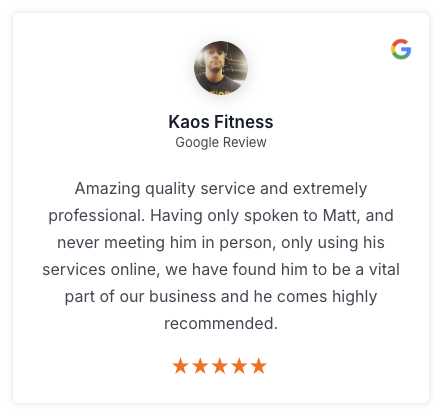
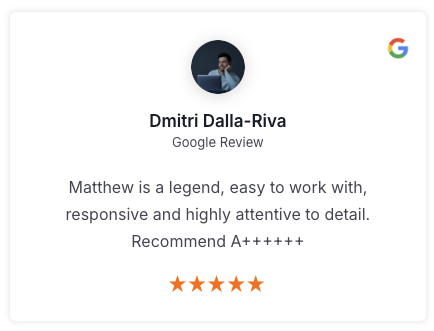
Below are real life examples from businesses like yours who needed to use a bookkeeper.











Frequently asked questions restaurant owners ask before hiring a bookkeeper
Do I need to charge GST on all of my consulting services?
Most consulting services delivered to Australian clients attract GST. However, services delivered to overseas clients may qualify as GST-free exports of services under the zero-rating provisions, subject to specific conditions around where the client is located and the nature of the service. Matthew assesses the GST treatment applicable to your specific service types and client mix and ensures that treatment is applied consistently across every invoice and every BAS.
I use contractors to deliver some of my client work. Do I need to pay them super?
That depends on the structure of each engagement. The ATO assesses whether a worker is an employee or contractor based on the substance of the arrangement rather than the label on the contract or invoice. Where an arrangement meets the ATO’s definition of employment, super is owed regardless of how the engagement is documented. Matthew assesses each contractor arrangement and applies the correct treatment, protecting the business from an underpaid super liability that accumulates silently over the life of the engagement.
Do I have a TPAR obligation?
Consultancies in IT, management and certain other service categories that pay contractors may have a TPAR obligation. Whether your specific business falls within the reporting requirement depends on your industry classification and the proportion of your income that comes from relevant services. Matthew assesses your TPAR obligation as part of the onboarding process and manages the full preparation and lodgment process if one exists.
My invoicing is inconsistent and clients pay at different times. How does that affect my BAS?
GST on invoiced services becomes a BAS obligation when the invoice is issued if your business accounts for GST on an accruals basis, or when payment is received if you account on a cash basis. The basis your business uses has implications for cash flow and for how your BAS figures are calculated each quarter. Matthew confirms the correct accounting basis for your business and ensures your BAS reflects it accurately, so you are not paying GST before you have received the cash to fund it where the cash basis is appropriate.
Our books are behind and our accountant needs them for tax. Can you help?
Yes. Catch-up bookkeeping and file remediation are a standard part of the service. The starting point is a review of where things stand and a clear plan for what it will take to bring the records current. Most consulting practices that engage Matthew for catch-up work find the process moves faster than expected because he has done it many times before.
What does bookkeeping cost for a consulting practice?
Packages start from $150 per month and are structured around what your practice actually needs. A sole consultant with a small number of retainer clients has different requirements from a multi-consultant practice with project work, contractors, and complex income streams. The first consultation is free and Matthew will give you a clear indication of what is involved and what it will cost before any engagement begins.
Ready to get the financial side of your restaurant managed by a bookkeeper?
- You already know the books are not where they should be.
- You know the BAS gets done in a rush.
- You know you are not entirely sure the payroll rates are right.
- You know your accountant asks for things at tax time that take longer to find than they should.
- You have known all of this for a while now, and every month that passes without doing something about it is a month of risk accumulating quietly in the background.
One conversation with Matthew Powell will not cost you anything. Leaving it another month might.
Packages from
$150 per month
Structured around what your business actually needs
Registered & certified bookkeeper
Latest insights





Other industries we service